A trailer goes missing for half a day, a generator is left on the wrong site, and a supervisor spends the afternoon ringing drivers and subcontractors to work out who last moved it. That is usually where non powered asset tracking starts – not as a tech project, but as a response to wasted time, delayed jobs and avoidable cost.
For many businesses, non powered asset tracking is the missing layer in fleet visibility. Vehicles are often tracked well, but trailers, portable plant, site equipment, containers and hired assets can still sit outside the system. That gap creates blind spots in utilisation, maintenance, billing and accountability. If an asset does not have its own engine or built-in telematics, it can still have a major impact on operations.
What non powered asset tracking actually covers
Non powered assets are the things your team relies on but does not drive in the usual sense. Think trailers, skip bins, portable toilets, light towers, compressors, generators, traffic control trailers, water carts when unhitched, demountables and various pieces of plant equipment. In construction, hire, trades and community services, these assets move regularly between depots, worksites, customers and subcontractors.
Because they are not self-powered, they are often managed with whiteboards, spreadsheets or someone’s memory. That might hold together when the asset pool is small. Once the fleet grows or jobs become more spread out, the cracks show quickly. Equipment gets underused in one region while another branch hires more. Pickups and drop-offs are disputed. Maintenance is reactive. Admin teams spend too much time checking where assets are and whether they are still on hire.
Non powered asset tracking solves a very specific problem – it gives these assets a digital presence so they can be seen, located and managed alongside vehicles and powered equipment.
Why non powered asset tracking matters more than most teams expect
The obvious value is location visibility, but that is only the start. The bigger operational gain comes from knowing how assets move through the business.
When you can see where a trailer or generator is, you reduce the time spent chasing updates. When you can see how long it has been at a site, you improve billing accuracy. When you can identify whether an asset is active or sitting idle, you make better purchasing and hire decisions. When movement history is available, disputes become easier to resolve.
This is where many operations teams find the return. Not in a single dramatic event, but in daily friction being removed from dispatch, hire coordination, maintenance planning and customer service.
For businesses running mixed fleets, there is also a reporting benefit. Vehicles, plant and non-powered assets often support the same job, but if only one part of that picture is tracked, reporting stays incomplete. A job may look efficient on paper while non-powered equipment is being over-hired, misplaced or sitting unused.
How non powered asset tracking works in practice
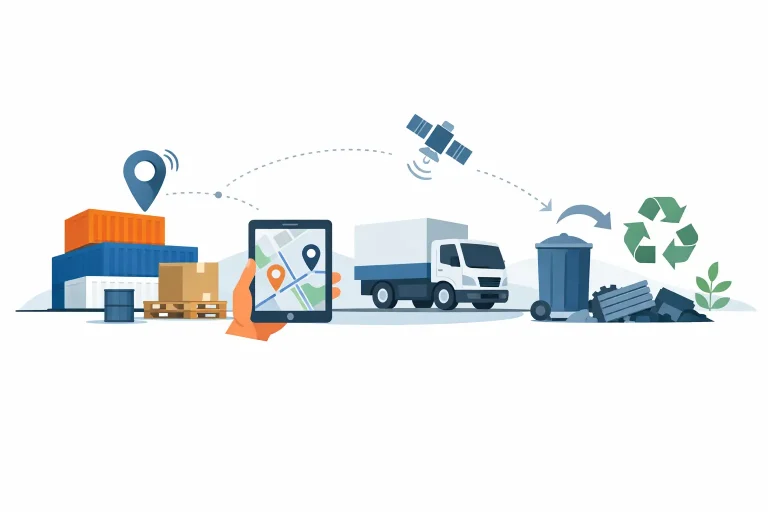
The technology is straightforward. A compact tracking device is attached to the asset and reports location and movement data back to a central platform. Depending on the use case, that device may be battery-powered or configured to suit assets that do not have a constant power source.
That sounds simple, and it is, but the setup should reflect how the asset is actually used. A trailer that moves every day has different tracking requirements from a generator that may sit on one site for weeks. A high-value plant item may justify more frequent reporting than a low-risk general asset. There is no single configuration that suits every asset class.
The platform matters as much as the hardware. Tracking data only becomes useful when it is easy to access, simple to interpret and connected to day-to-day decisions. Operations teams need to see where assets are, when they moved, how long they have been there and which assets are not being used. If that information is buried in a complicated system, adoption drops off quickly.
Where businesses usually see the quickest wins
The first win is usually time. Coordinators, schedulers and supervisors spend less time calling around to locate equipment. That alone can save hours each week in busy operations.
The second is utilisation. Once assets are visible, underused equipment stands out. Businesses often discover they already own enough trailers, bins or portable plant to cover demand more effectively, but poor visibility has been driving unnecessary hire or extra purchases.
The third is billing and recovery. If you charge customers for equipment on site, location and dwell-time records help support more accurate invoicing. They can also reduce awkward disputes about when an asset arrived, whether it was collected, or how long it remained on hire.
The fourth is loss prevention. Not every missing asset is stolen. Some are simply left on old jobs, shifted by another team, or parked in the wrong yard. Even so, the cost is real. Better tracking shortens recovery time and improves accountability.
Common use cases for non powered asset tracking
In civil and construction, non powered asset tracking is often used for trailers, generators, pumps, light towers and site equipment moving across multiple jobs. Site managers can confirm what is on each location without relying on manual updates.
In plant hire, it helps businesses keep tabs on customer-held assets, monitor asset turnaround and support billing periods with stronger location history. It can also help reduce idle stock sitting unnoticed in yards or remote locations.
In trades and services, tracking is useful for tool trailers, compressors and specialist equipment shared across crews. These are the assets that often create delays when no one is quite sure where they were left.
In government, community services and not-for-profit operations, asset tracking can support better stewardship of shared resources. When budgets are tight, getting more use from existing assets matters.
The trade-offs to think about before rollout
Non powered asset tracking is highly practical, but it is not a set-and-forget decision. A few trade-offs need to be considered early.
Battery life versus reporting frequency is one of the main ones. More frequent updates provide tighter visibility, but they can affect battery performance. For some assets, that is worth it. For others, a less frequent reporting schedule is more sensible.
The value of the asset should also shape the approach. Not every non-powered item needs the same level of tracking. A business may start with high-value, high-movement or high-loss assets first, then expand once the process is proven.
Installation and placement matter too. Devices need to be positioned securely and appropriately for the asset type and operating conditions. Harsh environments, weather exposure and physical handling all need to be factored in.
Then there is internal process. Tracking works best when teams agree on what they will do with the information. If an asset sits idle for 30 days, who reviews it? If an item leaves a designated area, who gets notified? The system can provide the visibility, but the business still needs practical rules around action and ownership.
What to look for in a tracking solution
A good solution should make life easier for operations, not add another layer of admin. That means clear location data, a straightforward platform, simple reporting and device options suited to different asset types.
It also helps to work with a provider that understands mixed fleets rather than vehicles alone. Non-powered assets do not behave like trucks or utes, and forcing them into a vehicle-only tracking model often creates gaps. The right setup should allow you to manage trailers, plant, equipment and vehicles in one place without overcomplicating the system.
Support matters as well. Rollout is usually smoother when there is help available to choose the right devices, set sensible reporting intervals and align the tracking setup with operational goals. For businesses new to telematics, practical support makes a big difference.
This is where a solutions-led provider such as Eziway Tech can be valuable, especially for organisations managing a mix of vehicles, mobile teams and non-powered assets across multiple sites.
Non powered asset tracking is really about control
Most businesses do not lose money because one trailer went missing once. They lose money through repeated small failures in visibility – duplicate hires, delayed jobs, underused equipment, unverified billing periods, avoidable replacement costs and too much staff time spent chasing answers.
Non powered asset tracking gives operations teams a clearer handle on the assets that often sit outside the usual fleet process. It helps turn scattered equipment into managed inventory, and managed inventory into better decisions.
If your vehicles are already tracked but your trailers, plant or portable equipment still rely on phone calls and spreadsheets, that is usually the next operational gap worth fixing. The best systems are not the ones with the longest feature list. They are the ones your team actually uses to reduce waste, improve uptime and keep work moving.