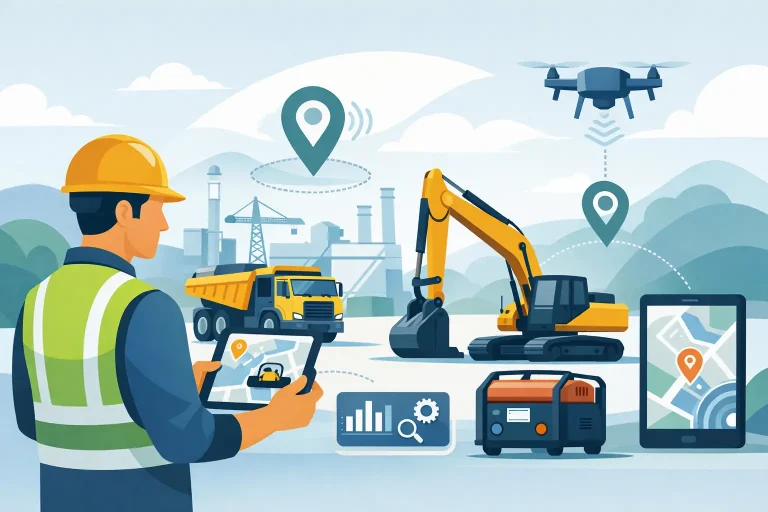
A skid steer goes missing for half a day, a generator is billed to the wrong job, and a hired excavator sits idle while another site waits for one. That is usually the point when a business realises spreadsheets, phone calls and whiteboards are no longer enough. A plant equipment tracking solution gives you live visibility of where assets are, how they are being used and when they need attention, without adding more admin to an already busy operation.
For businesses running civil crews, hire fleets, traffic management equipment, service teams or mixed field operations, the real issue is not just location. It is control. When plant and non-powered assets are spread across multiple sites, moved by different teams and hired in or out at short notice, small information gaps quickly turn into lost time, billing errors and avoidable downtime.
What a plant equipment tracking solution should actually solve
The best systems do more than put a dot on a map. They help answer the operational questions that come up every day. Is that excavator on the right site? How long has that compressor been idle? Which trailer has not moved this week? When is the next service due on the loader? Has an asset been used outside approved hours?
This matters because plant equipment often sits in a blind spot. Vehicles usually get the attention first because they move constantly and are easier to track. Plant, attachments, trailers and site equipment can be harder to monitor, especially when some assets are powered and some are not. A useful tracking solution brings those asset types into one view so your team is not managing one part of the operation well and the rest by guesswork.
There is also a financial angle that should not be ignored. If you cannot see utilisation clearly, you can end up over-hiring, under-billing or carrying underused equipment for too long. Tracking gives you the data to make better decisions about allocation, hire recovery, maintenance timing and future purchases.
Why visibility alone is not enough
Real-time location is valuable, but it is only the starting point. If your system tells you where an asset is but not whether it is active, idle, due for maintenance or being used on the wrong job, your team still has to fill the gaps manually.
That is why a practical plant equipment tracking solution should connect location data with utilisation, maintenance and reporting. For a plant hire business, that may mean being able to confirm when equipment arrived on site and how long it stayed there. For a construction contractor, it may mean tracking run hours to plan servicing before a breakdown takes a machine out of action. For a business managing trailers, signs, generators or portable assets, it may mean simple movement alerts and site history so nothing quietly disappears between jobs.
The right setup depends on the asset. Hard-wired devices make sense for high-value powered equipment where run hours and ignition-based data are useful. Battery-powered units are often a better fit for trailers or non-powered plant where movement and recovery matter more than engine information. That flexibility is important because one device type rarely suits every asset in the yard.
Where businesses usually feel the impact first
Most operators do not buy tracking because they want more technology. They buy it because something in the day-to-day is getting harder to manage.
One of the first gains is less time spent chasing answers. Operations staff stop ringing around to confirm where gear was dropped off. Admin teams spend less time reconciling timesheets, paper dockets or machine logs. Site supervisors can check asset locations and activity without waiting for updates from the field.
The next gain is utilisation clarity. This is where the numbers start to matter. If a machine is on hire but barely being used, that can trigger a conversation with the customer or help justify a different pricing structure. If owned equipment is sitting idle across several sites, that may reduce the need to hire additional plant. Better visibility does not magically fix underuse, but it does stop it from hiding.
Maintenance is another area where tracking earns its keep. Service schedules based on guesswork tend to be either late or overly cautious. Run-hour based maintenance is more practical because it reflects actual use. That means fewer unnecessary service intervals and less risk of pushing equipment past the point where reliability starts to drop.
There is also the security benefit. Plant theft is expensive, disruptive and frustratingly common. Location history, movement alerts and asset recovery support can make a major difference, particularly for high-value equipment left on remote sites after hours.
Choosing the right plant equipment tracking solution
Not every platform suits every business, and this is where trade-offs matter. A large contractor with hundreds of mixed assets may need broad asset coverage, detailed reporting and stronger compliance workflows. A smaller operator may care more about quick installation, simple reporting and affordable monthly costs.
Ease of use matters more than many businesses expect. If the platform is hard to learn or slow to navigate, the team will fall back to calls, texts and manual workarounds. A good system should make daily tasks faster, not give people another screen to avoid.
Support matters too. Equipment tracking is not just software. It involves devices, installations, reporting setups and the reality of assets that do not all behave the same way. Direct local support can save a lot of time when you are rolling out tracking across mixed plant, trailers and field equipment.
It is also worth asking how well the solution handles different asset classes. Many tracking providers are strong on vehicles and much weaker on plant and non-powered assets. If your operation includes excavators, loaders, trailers, light towers, generators, pumps, bins or portable site equipment, you want a system designed as a solution for all assets, not one stretched beyond its original purpose.
A plant equipment tracking solution is only useful if it fits your workflow
This is where many rollouts succeed or fail. The technology might be sound, but if it is not matched to how your team allocates assets, manages jobs and reports on usage, it will not deliver the full return.
For example, a plant hire business may need site arrival and departure visibility to support customer billing and reduce disputes. A civil contractor may care more about machine hours, site dwell time and utilisation by project. A field services operation with trailers and mobile equipment may need movement alerts, maintenance reminders and a simple way to identify assets that have been inactive for too long.
That means setup should start with operational priorities, not device specifications. What decisions are currently slow, uncertain or manual? Where are assets being lost, underused or over-serviced? Which reports would actually help supervisors, admin staff and managers do their jobs better? Once those answers are clear, the right tracking mix becomes much easier to define.
This is also why businesses often get better results from a provider that takes a practical, solutions-led approach. At Eziway Tech, the focus is not just on installing trackers. It is on helping customers improve visibility, cut paperwork, support compliance and keep mixed assets productive without making the system harder than it needs to be.
What good tracking looks like after rollout
A strong result is not flashy. It looks like fewer calls asking where equipment is. It looks like cleaner job allocation, more accurate billing records and less hired plant sitting idle. It looks like service reminders arriving before a breakdown, not after. It looks like managers being able to answer operational questions quickly instead of pulling information together from four different places.
Good tracking also creates better habits over time. Once utilisation data is reliable, businesses tend to make smarter decisions about fleet size, replacement timing and hire recovery. Once asset movement is visible, unauthorised use becomes easier to spot. Once reports are consistent, compliance and customer conversations become less reactive.
The value builds because the information becomes part of daily operations, not an extra report that sits unopened.
The real question is not whether to track plant
For most asset-intensive businesses, the real question is how long you can afford to operate without clear visibility. If plant equipment is critical to your jobs, revenue and customer service, then knowing where it is, whether it is being used and when it needs attention is not a nice-to-have. It is basic operational control.
A plant equipment tracking solution should make the job easier from day one. It should reduce chasing, tighten reporting, support maintenance and help your team get more value from the assets you already own or hire. If it cannot do that in a practical, easy-to-use way, it is the wrong system.
The best place to start is simple: look at where uncertainty is costing you time or money right now, then choose a solution that turns those blind spots into useful decisions.