
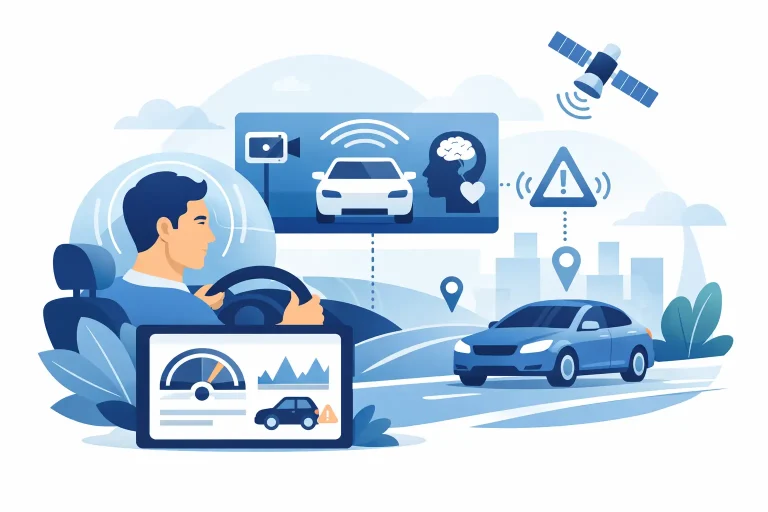
If two drivers run the same route in similar vehicles but one burns more fuel, brakes harder and clocks more incidents, the problem usually is not the route. It is behaviour behind the wheel. A driver behaviour monitoring system helps fleet operators spot those patterns early, before they turn into claims, downtime, excess wear or difficult conversations with clients.
For businesses running utes, vans, trucks, plant and mixed assets, this kind of visibility is no longer a nice extra. It is becoming a practical way to improve safety, tighten cost control and reduce the guesswork in day-to-day operations. The value is not just in collecting data. It is in turning driving activity into something managers can actually act on.
What a driver behaviour monitoring system actually does
At its core, a driver behaviour monitoring system tracks how a vehicle is being driven and flags patterns that increase risk or cost. That can include harsh braking, rapid acceleration, speeding, excessive idling, fatigue-related indicators, distracted driving events and cornering behaviour. In some fleets, it also includes dash cam footage, driver scorecards and alerts that help managers respond quickly.
The point is not to watch drivers for the sake of it. The point is to understand what is happening in the field when managers are not in the passenger seat. Without that visibility, most businesses rely on incident reports, customer complaints, fuel data or maintenance costs to tell them something is wrong. By then, the damage is already done.
A good system gives context as well as raw data. If a speeding event happens, you want to know where, when, how often and whether it is isolated or part of a broader pattern. If idling is high, you need to know whether it is avoidable waste or part of the job. That distinction matters.
Why fleets are putting driver behaviour under closer review
Rising operating costs have made driver performance a commercial issue, not just a safety one. Fuel, tyres, servicing, insurance and vehicle replacement all feel the impact of aggressive or inconsistent driving. Even small changes in behaviour across a fleet can add up fast.
There is also the compliance side. Many operators have legal and workplace obligations around driver safety, fatigue and vehicle use. A driver behaviour monitoring system can support those obligations by creating a clearer record of driving activity and helping businesses show they are taking reasonable steps to manage risk.
For service-based fleets, there is a reputation factor too. The way a branded vehicle is driven reflects on the business. Speeding, tailgating or harsh driving can trigger complaints and undermine trust, especially when staff are working in public-facing roles.
The biggest gains usually come from three areas
Safety is the obvious one. When risky habits are identified early, managers can coach before a serious event occurs. That might mean addressing harsh braking in metro traffic, repeated speeding on regional roads or signs that a driver is operating while fatigued. The system gives you a starting point for a factual conversation rather than a vague warning.
Cost control comes next. Smoother driving generally means lower fuel use, less brake wear, fewer tyre replacements and reduced strain on vehicles. It can also lower the chance of preventable accidents, which helps avoid repair bills, excess payments and lost utilisation.
Then there is accountability. Many fleet managers already know which drivers are consistently reliable and which ones create more admin. The challenge is proving it fairly and consistently. Behaviour data helps remove opinion from the process. That matters for coaching, policy enforcement and recognising good performance.
What to look for in a driver behaviour monitoring system
Not every platform delivers the same level of value. Some systems provide basic event tracking but little context. Others offer a fuller picture through GPS telemetry, video, alerts and reporting that tie driving behaviour back to broader fleet operations.
The best fit depends on your fleet. A civil contractor managing mixed assets will have different needs from a community services provider or a transport operator. Still, a few features tend to matter across the board.
Clear event definitions and reliable data
If the system flags too many false events, managers stop trusting it and drivers stop taking it seriously. Thresholds need to be sensible and flexible enough to suit vehicle types, job conditions and road environments. A rigid setup can create noise instead of insight.
Driver-friendly reporting
Scorecards and trend reports should be easy to understand. If a supervisor needs to spend half an hour interpreting a dashboard, the tool becomes shelfware. What works best is a simple view of who needs attention, what behaviour is driving risk and whether things are improving over time.
Video where it adds real value
AI dash cams can be especially useful for high-risk fleets or businesses dealing with customer disputes and insurance claims. Video adds context that pure telemetry cannot. It can show whether a harsh braking event was caused by poor driving or by another road user cutting in unexpectedly. That protects drivers as much as it holds them accountable.
Alerts that support action
Real-time alerts are useful when they help prevent escalation, but constant notifications can become background noise. Good systems let you decide what warrants an alert and who needs to receive it.
Driver buy-in matters more than most businesses expect
One of the fastest ways to derail a rollout is to frame monitoring as surveillance. Drivers will naturally ask what is being tracked, why it is being tracked and how the information will be used. If those questions are not answered early, resistance builds.
The smarter approach is to position the system as a safety and support tool. Used properly, it can protect drivers from false claims, identify route pressures, highlight unrealistic schedules and back up requests for further training. It can also recognise improvement, which is often overlooked.
That does not mean every team will welcome it straight away. Some will be sceptical. Some will test the boundaries. That is normal. What matters is consistency. If management says the system is about safety but only uses it after complaints, trust drops quickly. If it is used fairly, with clear policies and coaching, acceptance tends to improve.
Driver behaviour data only works when it leads to action
The businesses that get the best return from a driver behaviour monitoring system do not just install the hardware and hope for the best. They build a process around it.
That usually starts with setting a baseline. What does current performance look like across speeding, idling, harsh events and incident rates? From there, realistic targets can be set. The first goal may not be dramatic change. It may simply be cleaner visibility and more consistent follow-up.
Coaching should be specific and timely. Telling a driver to be more careful is rarely effective. Showing a repeated pattern of harsh braking between 3 pm and 5 pm on a known route creates a more useful discussion. Sometimes the answer is training. Sometimes it is route planning. Sometimes it is workload pressure causing rushed behaviour. The system can reveal the symptom, but managers still need to find the cause.
This is where an easy-to-use platform matters. If reporting is clunky or support is hard to reach, valuable data sits untouched. Eziway Tech’s approach of combining practical technology with direct local support suits businesses that need results without adding another layer of complexity.
It is not one-size-fits-all
A driver behaviour monitoring system should reflect how your fleet actually operates. A plumbing business with ten vehicles does not need the same setup as a national logistics fleet. Likewise, a business managing non-powered assets, trailers and field staff may want behaviour reporting integrated with wider operational visibility rather than treated as a standalone tool.
There are trade-offs as well. More data is not always better. Too many reports can overwhelm busy teams. Camera-based systems can deliver stronger insight, but they also require a thoughtful rollout and clear communication. The best outcome usually comes from choosing the level of monitoring that matches your risk profile, operational maturity and internal capacity to act on the information.
That is why implementation matters as much as features. A well-matched system should be simple enough for everyday use and flexible enough to grow with the business.
Where this delivers the most value
Fleets with high kilometre travel, regular urban driving, tight service windows or elevated insurance exposure often see the strongest gains first. Construction and field service businesses benefit when they need better oversight across dispersed teams. Community transport and not-for-profit operators can use behaviour data to strengthen duty of care. Logistics operators can use it to improve consistency across a larger driver pool.
Even smaller fleets can benefit if one serious incident would significantly affect costs, reputation or service delivery. You do not need hundreds of vehicles for behaviour monitoring to pay off. You need enough risk, enough movement and enough operational pressure that better visibility will change decisions.
The real question is not whether drivers should be monitored more closely. It is whether your business can afford to keep managing driver risk with partial information. When the right system is in place, better driving becomes easier to see, easier to coach and easier to sustain.