
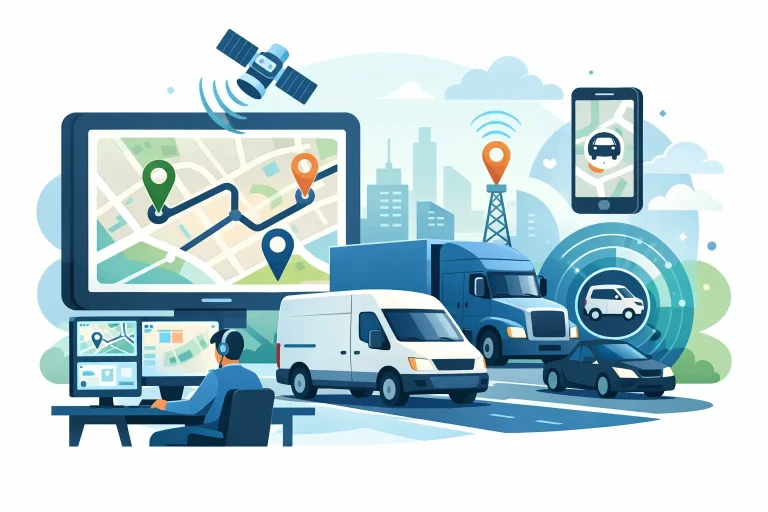
If you are still chasing drivers for job updates, piecing together timesheets from text messages, or trying to work out why a trailer vanished from the yard last Thursday, the problem usually is not effort. It is visibility. Good gps fleet management software gives operations teams a clear, live picture of where vehicles, plant, trailers and field staff are, how they are being used, and what needs attention next.
That matters because most fleet issues are not dramatic. They are small delays, missed services, incomplete records, disputed hours, avoidable idling and poor handover between office and field. Left alone, those small gaps turn into margin pressure, safety risk and frustrated customers. The right system does not just show dots on a map. It helps you run the day with less guesswork.
What gps fleet management software should actually do
A lot of platforms talk about tracking, but fleet operations rarely stop at vehicles alone. Many Australian businesses are running mixed fleets – utes, trucks, trailers, yellow gear, generators, pumps and mobile teams spread across multiple jobs. If your software only tracks powered vehicles, you still end up managing half the operation manually.
That is why the better approach is to look for software that brings different assets into one view. Live location is the obvious starting point, but reporting, maintenance scheduling, driver behaviour, utilisation and compliance are where the real value shows up. When those pieces sit together, your team spends less time switching systems or building workarounds in spreadsheets.
For example, a civil contractor might need to know whether a truck reached site on time, whether an excavator has moved in the past week, whether the service interval is coming up, and whether the operator exceeded speed thresholds on the way back to the depot. These are different questions, but they belong in the same operational conversation.
Why fleets outgrow basic tracking
Basic GPS tracking can be enough for a small business with a handful of vehicles and simple routes. Once operations become more complex, those entry-level tools start to show their limits.
The first issue is usually reporting. A map helps in the moment, but managers also need reliable records for payroll, billing, customer service and internal accountability. If the software cannot turn movement data into useful reports, someone in the office ends up doing it by hand.
The second issue is asset mix. Plenty of businesses need visibility across powered and non-powered assets. A trailer, skip bin or portable plant item can be just as operationally important as a truck. If those assets are left out, utilisation drops and losses become harder to prevent.
The third issue is support. Fleet technology is only useful if people can learn it quickly, trust the data and get help when something needs adjusting. That is especially true for organisations introducing telematics for the first time. A platform can look impressive in a demo and still be painful to roll out if the support is distant or generic.
The operational gains that matter most
The best gps fleet management software improves daily operations in practical ways. It reduces time spent calling drivers for updates because dispatch can see movement and status in real time. It cuts paperwork by turning trip data into automated reports. It supports more accurate billing when you can verify attendance, time on site or kilometres travelled.
Safety is another major gain, but it needs to be handled honestly. Driver behaviour monitoring, dash cams and in-vehicle alerts can reduce risky driving and help with incident investigations. At the same time, if the system is introduced badly, drivers may see it as surveillance rather than support. Clear communication matters. When teams understand that the goal is safer driving, fairer incident review and better asset care, uptake is usually much stronger.
Maintenance is often where software quietly pays for itself. Missed servicing leads to breakdowns, downtime and expensive reactive repairs. Scheduled maintenance reminders, usage-based servicing triggers and asset history give managers a better chance of keeping vehicles and equipment available. For fleets that rely on uptime, that is not a nice extra. It is central to service delivery.
Choosing gps fleet management software for mixed fleets
Not every business needs the same setup, which is why hardware flexibility matters. Some assets suit hard-wired devices. Others are better with plug-and-play units, battery-powered trackers or app-based solutions for field staff. If a provider forces everything into one model, the fit usually becomes awkward and expensive.
This is particularly relevant for industries like plant hire, construction, traffic management and community services, where fleets can include everything from heavy vehicles to temporary equipment and mobile workers. The more varied the operation, the more valuable it is to have one platform that can adapt to different asset types.
Ease of use should also be taken seriously. Fleet managers may love data, but most teams do not have time to wrestle with complicated menus or overly technical reports. A good system makes common tasks simple – checking location, finding a trip history, setting alerts, reviewing utilisation, downloading reports and confirming service schedules. If those basics are hard, adoption will stall.
What to check before you commit
Software selection should start with your operating reality, not a feature checklist. Ask what problems are costing you time or money right now. Is it unauthorised use, uncertain ETA reporting, missing equipment, weak maintenance control, manual log collection, customer disputes or poor visibility across subcontractors and field teams? Your answers will narrow the decision quickly.
Then look at the data quality and reporting logic. Some systems produce plenty of data but very little clarity. You want reporting that supports action – hours worked, utilisation trends, route history, exceptions, maintenance due dates and safety events that managers can actually review and act on.
It is also worth checking how the software handles compliance and evidence. Businesses in transport, civil works and government-facing contracts often need stronger records, whether that is proof of attendance, movement history, maintenance documentation or incident footage. A platform that supports those needs can reduce admin pressure and make audits far less painful.
Support should be part of the buying decision, not an afterthought. Australian-based support, practical onboarding and a provider that understands how fleets work on the ground will make a noticeable difference after rollout. For many businesses, that is where value is won or lost.
Where the return on investment usually shows up
ROI does not always arrive as one dramatic saving. More often, it appears across several operational areas at once. Less idle time. Better route visibility. Fewer phone calls between office and field. More accurate timesheets. Faster response to customer queries. Reduced asset loss. Better maintenance planning. Safer driving behaviour.
For a transport operator, that may mean fewer delivery disputes and tighter control of vehicle downtime. For a trades business, it could mean better technician coordination and cleaner payroll records. For a plant hire company, it may be stronger utilisation and quicker recovery of equipment that has been left off-hire or moved unexpectedly.
That is why the best software conversations are not really about maps. They are about control. Can you see what is happening, verify what happened, and act early enough to improve the result? If the answer is yes, the platform is doing its job.
A practical standard for buyers
If you are comparing providers, set a simple standard. The software should make the day easier for operations, not just produce more data. It should support different asset types, give you reporting that reduces admin, help protect people and equipment, and be straightforward enough that your team actually uses it.
That is the reason many Australian organisations move towards solutions-led platforms rather than standalone trackers. They need more than location. They need one practical system for visibility, compliance, utilisation, safety and support. That is the space where providers like Eziway Tech stand out – not by making fleet management sound complicated, but by making it easier to run in the real world.
The smartest choice is usually the one that fits how your business already works, while quietly removing the friction that slows it down. When that happens, fleet management stops feeling reactive and starts becoming something your team can stay ahead of.