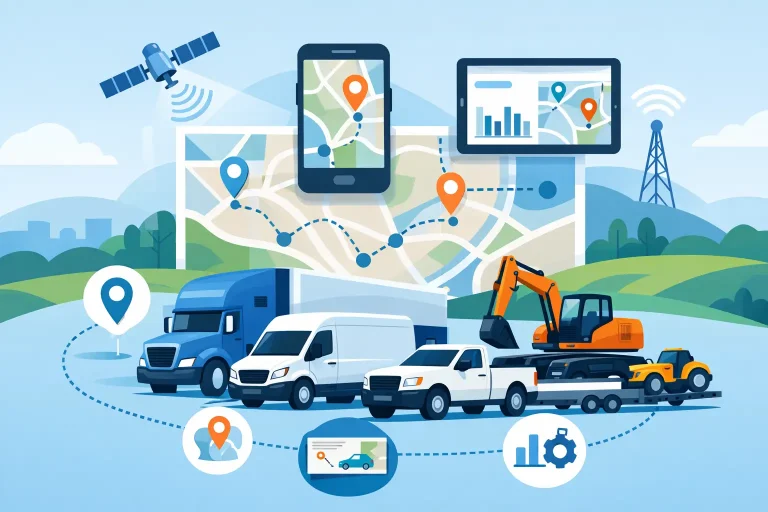
A service ute is on the road, a trailer was left at a job site on Friday, an excavator has clocked more hours than expected, and no one is quite sure which generator is available for tomorrow morning. That is exactly where fleet tracking for mixed assets starts to matter – not as a nice extra, but as a practical way to run operations without guesswork.
For many businesses, the challenge is not tracking one type of asset. It is managing a mix of powered and non-powered equipment, vehicles, trailers, plant, and sometimes even field staff, all moving on different schedules and across different sites. Trying to piece that together from phone calls, spreadsheets and paper pre-starts usually leads to delays, idle assets, missed maintenance and billing gaps.
Why fleet tracking for mixed assets is different
A mixed fleet does not behave like a standard vehicle fleet. A truck sends regular movement data. A trailer might sit still for three days, then move unexpectedly. A skid steer may need engine-hour reporting more than route history. A field worker may need location visibility through an app rather than a hard-wired device.
That matters because the right tracking setup depends on the asset itself. If you treat every asset the same, you either overcomplicate the rollout or end up with blind spots. In practice, a mixed asset environment needs a combination of device types and reporting views that match how each asset is used.
This is also where some businesses get caught out when choosing a platform. They buy a vehicle tracking system, then try to force trailers, plant and non-powered equipment into the same model. It can work up to a point, but it often leaves operations teams juggling separate tools or making decisions with incomplete data.
What good visibility actually looks like
The goal is not to put a dot on a map for every asset and call it done. Good visibility means you can answer operational questions quickly and with confidence.
Where is it? Is it being used? Has it been moved after hours? Is it due for service? How long has it been idle? Which site is it on? Who last had it? Is the paperwork going to match the hours and movements recorded?
When those answers live in one platform, daily coordination gets easier. Dispatch can assign the nearest available vehicle. Operations can confirm whether hired plant is being used enough to justify the cost. Finance can reconcile usage with invoicing. Compliance teams can pull reports without chasing people for updates.
That is the real value of fleet tracking for mixed assets. It reduces the number of unknowns in the working day.
The operational gains come from fit, not features alone
Plenty of systems can promise live tracking, alerts and reports. What matters more is whether the setup fits your asset mix and your workflow.
A construction business, for example, may need hard-wired GPS units in trucks, battery-powered trackers on trailers, and utilisation reporting on excavators and generators. A community services organisation may care more about vehicle visibility, driver safety and mobile workforce accountability. A trade business may simply want to know which assets are active, where they are, and when maintenance is due.
The technology should support those outcomes without adding admin. If staff need to jump between platforms, manually match assets, or build their own workarounds, the reporting may look impressive but the operational benefit is limited.
This is why a practical rollout starts with the questions your team needs answered each day. Once that is clear, device selection and reporting become much simpler.
Common mixed asset problems tracking can solve
The first is underutilisation. Many businesses own or hire more assets than they need because they cannot see what is already available. One trailer is booked out while another sits unused in a depot. One machine is doing all the work while another barely moves. Tracking and utilisation data make those patterns obvious.
The second is avoidable downtime. When maintenance is based on rough estimates or scattered records, servicing happens too late or too early. Neither is ideal. Usage-based scheduling, whether by kilometres, engine hours or run time, gives maintenance teams a more reliable trigger.
The third is loss of control over non-powered assets. Trailers, site equipment and portable assets are easy to misplace because they do not naturally generate data in the same way a vehicle does. With the right battery-powered tracking, they stop being invisible between handovers.
The fourth is paperwork and billing friction. If a business charges by time on site, machine hours, or asset allocation, accurate tracking data supports cleaner invoicing and fewer disputes. It also helps internally when managers need to justify asset purchases, redeployments or hire decisions.
Choosing the right devices for a mixed fleet
This is usually where the project succeeds or struggles. Different assets need different tracking methods, and there is no single device that suits everything.
Hard-wired units are often best for vehicles and powered plant where consistent power, ignition status and detailed telemetry are valuable. Plug-and-play devices can suit faster deployment across light vehicles, especially where installation time needs to stay low. Battery-powered trackers are ideal for trailers and non-powered equipment where movement, location and recovery are the priority. App-based tracking can support staff visibility when the person matters as much as the vehicle.
There is a trade-off here. The more detailed the data, the more important proper installation and configuration become. On the other hand, the simpler the device, the easier the rollout, but the narrower the reporting may be. The best approach is usually a blended one rather than choosing a single hardware type for every asset.
Fleet tracking for mixed assets should support compliance too
For many organisations, tracking is not only about efficiency. It also helps tighten compliance processes that often slip when fleets grow.
Vehicle movements, driver behaviour, maintenance records and site attendance all create a more reliable audit trail. That does not mean telematics replaces every compliance process. It means your team spends less time chasing information and more time acting on it.
If your business works across civil, transport, government or community services, that matters. Expectations around safety, duty of care and reporting are only getting tighter. A platform that combines tracking with maintenance schedules, behaviour reporting and optional in-vehicle monitoring can reduce risk while making day-to-day oversight more manageable.
The key is balance. Too many alerts create noise. Too little reporting leaves exposure. Good systems let you focus on the exceptions that actually need attention.
One platform matters more than most businesses think
The hidden cost in mixed fleet operations is often not hardware. It is fragmentation.
When vehicle tracking sits in one system, dash cams in another, plant hours in a spreadsheet and trailer locations in someone else’s inbox, every question takes longer to answer. Teams end up relying on experienced staff who know where to look, which is risky when workloads rise or people move on.
A single platform will not fix poor processes on its own, but it does remove a lot of friction. It gives operations, compliance, finance and supervisors a shared version of events. That improves handovers, speeds up reporting and reduces the back-and-forth that slows decision-making.
That is one reason solutions-led providers such as Eziway Tech focus on broad asset coverage rather than vehicle tracking alone. For businesses with a genuine mix of assets, operational simplicity often matters just as much as the data itself.
What to ask before you roll it out
Before choosing a system, it is worth being honest about what success looks like in your business. If the goal is theft recovery, your setup may look different from one focused on utilisation and maintenance. If you need easy adoption across depots and field teams, simplicity may matter more than advanced configuration.
Ask whether the platform can track all relevant asset types in one place. Check how reporting works for engine hours, idle time, maintenance, location history and after-hours movement. Consider how easy it is for office teams and supervisors to actually use. And do not underestimate support – especially if this is your first move into more advanced telematics.
A system that looks fine in a demo can still create headaches if onboarding is weak or local support is hard to reach. Mixed asset tracking touches real operations, so responsiveness matters.
The businesses that get the best result are usually not the ones chasing the longest feature list. They are the ones choosing a setup that fits how they work now, while giving them room to improve utilisation, safety and control over time.
If your fleet includes more than just vehicles, treating every asset as part of the same operational picture changes the way decisions get made. You stop relying on assumptions, and start working from live, usable information. That is when tracking stops being a monitoring tool and becomes a practical advantage.