
At 4:45 am, before the first delivery window opens, most transport problems have already started. A truck leaves late. A driver swaps vehicles without anyone logging it. A customer asks for an ETA that the office cannot confirm with confidence. By lunchtime, small gaps in visibility turn into overtime, missed jobs, and arguments over what actually happened. That is where telematics for transport companies earns its keep.
For operators managing trucks, vans, trailers, subcontractors or mixed fleets, telematics is not just about dots on a map. Used properly, it becomes a working system for knowing where assets are, how they are being used, whether drivers are operating safely, and which parts of the day are costing more than they should. The value is practical. Less chasing. Better proof. Faster decisions.
What telematics for transport companies really means
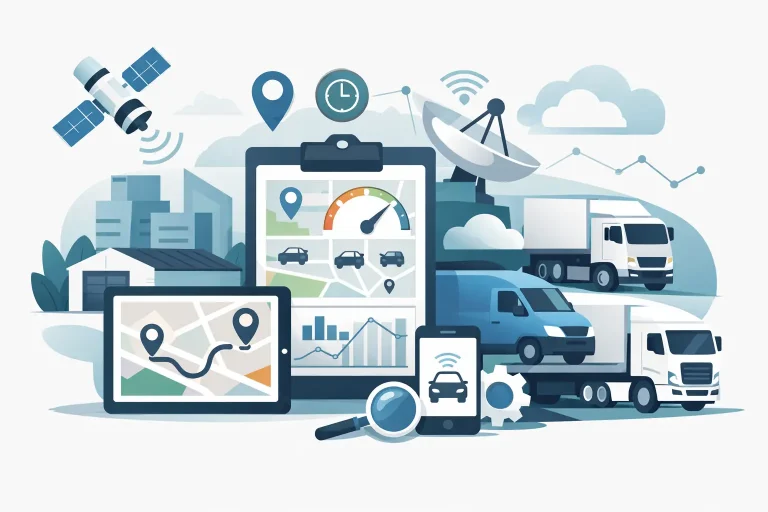
Telematics combines GPS tracking, vehicle data, driver activity, alerts and reporting in one place. In a transport business, that means you can see where vehicles are in real time, review trip history, monitor idling, speed and harsh driving, and keep records that support maintenance, compliance and customer service.
The key point is that telematics should help the operation run better, not simply create more data. Plenty of businesses have tracking installed but still rely on phone calls, paper run sheets and manual follow-up because the system is not matched to how the fleet actually works. Good telematics closes that gap. It turns movement into usable information.
For some companies, the biggest gain is dispatch visibility. For others, it is chain of responsibility support, asset utilisation, or more accurate job costing. It depends on fleet type, contract model and how much coordination happens across the day.
Where transport operators see the biggest gains
Most transport companies do not have one single problem. They have five or six recurring issues that compound each other. Telematics helps because it tackles several of them at once.
The first is wasted time. If dispatchers are ringing drivers for location updates, checking whether a vehicle is still on site, or guessing who is closest to the next pickup, labour is being spent on avoidable admin. Live visibility shortens those decisions.
The second is fuel and wear. Excessive idling, harsh acceleration, speeding and poor route choices all increase operating costs. On paper, each event looks minor. Across a fleet, they become a meaningful line item. Telematics makes those patterns visible so managers can coach drivers, review routes and reduce waste without relying on gut feel.
The third is customer pressure. Clients want realistic ETAs, proof of attendance and answers when loads are delayed. A transport team that can verify arrival times, stop duration and route history is in a much stronger position than one working from memory and text messages.
Then there is compliance. Depending on the operation, you may need clearer records around vehicle use, inspections, maintenance timing, fatigue-related behaviours or driver accountability. Telematics does not replace every compliance process, but it gives transport businesses a stronger factual record to work from.
Better visibility changes more than dispatch
The obvious use case is live tracking, but the broader impact is operational control. Once a business can reliably see where vehicles and trailers are, what jobs were completed, and how long assets sat idle, planning gets sharper.
A common example is underused equipment. A company may assume it needs more vehicles because jobs are being squeezed into the day. After reviewing utilisation data, it may find the issue is not fleet size at all. One depot has assets sitting idle while another is stretched. A few route or allocation changes can delay capital spend.
The opposite can also be true. A transport company might think a vehicle is productive because it is constantly moving, when in reality it is spending too much time in traffic, queuing on site or waiting between jobs. Telematics helps separate activity from output.
That kind of visibility matters for trailers and non-powered assets as well. In many transport businesses, the real cost is not only in vehicle movement but in time lost locating the right trailer, container or piece of equipment. A system that covers mixed asset types gives operations teams a more complete picture of what is available and where it is.
Safety and driver behaviour without the guesswork
Safety conversations are easier when they are based on evidence. If a manager only speaks to drivers after a complaint comes in, coaching can feel reactive and inconsistent. Telematics gives a clearer baseline.
Driver behaviour reports can flag speeding, harsh braking, rapid acceleration and excessive idling. AI dash cams and in-vehicle monitoring can add more context where higher-risk operations need it. That does not mean every fleet requires the same level of monitoring. A metro courier fleet, a linehaul operation and a civil contractor moving plant have different risk profiles. The right setup depends on duty of care requirements, insurance pressure and how the vehicles are used.
There is also a balance to strike. If technology is introduced as a surveillance tool, teams may resist it. If it is introduced as a safety, fairness and performance tool, with clear expectations and practical support, adoption is usually stronger. The system should help identify trends, protect good drivers and address issues early, not simply generate more exceptions for the office to chase.
Reporting that helps the office as much as the road
One of the most overlooked benefits of telematics for transport companies is what it does for administration. Accurate trip records, run times and stop histories support payroll checks, job verification and customer billing. That matters in any business where vehicle movement is directly tied to revenue.
It also reduces the friction that comes from conflicting records. When a customer disputes attendance, when a driver questions an allocation, or when a manager needs to know why a route blew out, telematics provides a timestamped record. That saves time, but it also improves trust because decisions are based on consistent data.
Maintenance is another strong example. Service schedules often depend on kilometre readings, engine hours or usage patterns. Without reliable data, businesses either service too late and risk downtime, or too early and spend more than necessary. Telematics helps keep maintenance aligned with actual use.
Choosing a system that fits transport operations
Not every telematics platform is built for the same job. Some are fine for basic vehicle tracking but fall short when a business needs trailer tracking, compliance reporting, field staff visibility or a mix of hard-wired and battery-powered devices. That is where selection matters.
For transport companies, ease of use should be high on the list. If the platform is too clunky, dispatchers will avoid it, drivers will not engage with the process, and managers will default back to spreadsheets. The best system is the one your team can actually use every day under pressure.
Support matters too. When hardware needs to be moved, reporting needs adjusting, or the operation changes shape, local help is worth more than a long feature list. A practical partner will ask how your fleet works, what assets you need to track, and where reporting can remove admin rather than add it.
This is where a solution-led provider can make a real difference. Businesses such as Eziway Tech focus on making fleet visibility simpler across vehicles, trailers, plant and field teams, which is often more useful than a one-size-fits-all tracking setup.
The trade-offs to think about before rollout
Telematics delivers value, but only when the rollout is handled properly. If expectations are vague, teams may see the system as another layer of oversight rather than an operational tool. Clear goals help. Are you trying to reduce fuel spend, improve on-time performance, tighten compliance records, or all three?
There is also a change management piece. Drivers and office staff need to understand what is being tracked, how data will be used, and what good performance looks like. If reporting is too noisy, managers will stop paying attention. If alerts are too broad, important issues get buried.
Cost should be looked at the right way. The cheapest tracking unit is not always the lowest-cost option if it cannot support the assets, reporting or responsiveness your business needs. Equally, paying for advanced features you will never use is just as wasteful. The right fit sits in the middle – enough capability to improve operations, without unnecessary complexity.
Why telematics is becoming a baseline, not a bonus
In transport, margins are tight and customer expectations are not getting easier. Businesses are being asked to do more with the same fleet, keep drivers safer, prove service delivery and respond faster when plans change. That is why telematics is moving from nice-to-have to standard operating infrastructure.
The operators getting the most from it are not treating it as a gadget. They are using it to tighten dispatch, reduce avoidable costs, improve accountability and keep assets productive. When the system is easy to use and matched to the realities of the job, telematics stops being another screen in the office and starts becoming part of how the business runs.
If your team is still spending too much time chasing vehicles, checking paper records or reacting to problems after the fact, that is usually the sign. Better visibility does not solve everything overnight, but it gives you a much firmer grip on the day before it runs away from you.