
A missed service, a driver calling for an address update, a trailer that should be on site but is nowhere obvious, and a spreadsheet that is already out of date by 10 am – that is usually the point where a mobile fleet management platform stops being a nice-to-have and starts looking like basic operational infrastructure.
For businesses running vehicles, plant, trailers, equipment and field staff, the real issue is not just tracking dots on a map. It is knowing what is happening right now, proving what happened later, and giving your team a simpler way to manage the work in between. The right platform reduces phone calls, cuts paperwork, improves accountability and helps protect uptime without making the job harder for the people using it.
What a mobile fleet management platform actually does
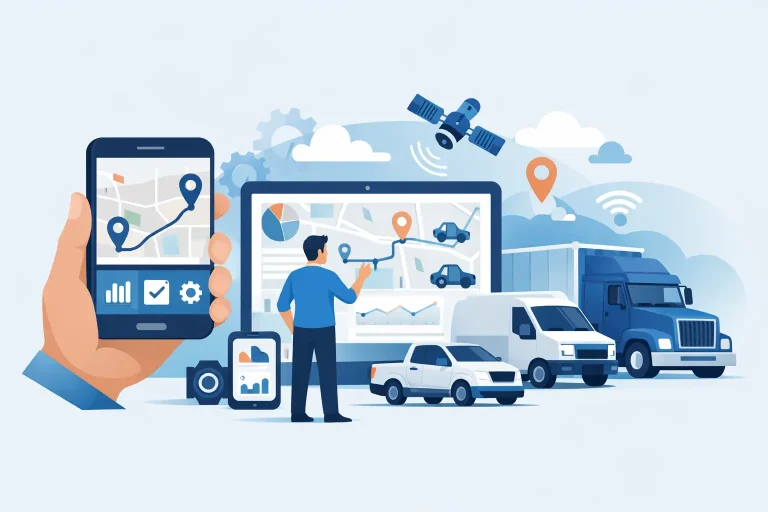
At a practical level, a mobile fleet management platform brings fleet activity into one place that managers and field teams can access from desktop and mobile. That usually includes live location data, trip history, driver behaviour, maintenance scheduling, utilisation reporting, alerts and compliance records. In stronger systems, it also extends beyond standard vehicles to trailers, yellow gear, non-powered assets and lone or mobile workers.
That wider view matters. Many businesses do not run a neat, uniform fleet of the same vehicle type. They run mixed assets across jobs, contractors, depots and service areas. A platform that only handles vehicles leaves gaps in visibility, and gaps usually turn into delays, disputes or extra admin.
The best systems also make mobile access genuinely useful rather than treating it as a cut-down extra. If a supervisor is on site, they should be able to check vehicle locations, confirm job movement, review alerts or pull up recent activity without heading back to the office. If an operations manager is after hours, they should still be able to respond quickly when something needs attention.
Why mobile access changes daily operations
The word mobile can sound minor, but it changes how fleet information gets used. A desktop-only system often means data is available, yet not available when decisions are being made. Work does not happen neatly at a desk. It happens in yards, on roads, at customer sites and across multiple moving crews.
A mobile fleet management platform gives decision-makers access where the work is happening. That can mean checking whether the nearest technician can take an urgent call-out, confirming a machine has arrived before a hire period starts, or seeing whether a driver’s route matched what was billed. Small decisions get made faster, and those small decisions add up.
There is also a people benefit. Drivers and field teams are less likely to be interrupted by avoidable calls when office staff can see location, movement and status for themselves. That does not eliminate communication, but it improves the quality of it. Instead of asking where someone is, the conversation can move straight to what needs to happen next.
The features that matter most
Not every fleet needs every feature, and buying on feature count alone is a good way to overcomplicate implementation. What matters is whether the platform solves your real operational problems.
Live tracking is the starting point, but it is rarely the whole value. Most operators also need historical playback, geofences, trip reports and alerting to understand arrivals, departures, dwell time and route exceptions. That helps with customer service, job verification and internal accountability.
Driver behaviour data is another major area. Harsh braking, speeding, idling and after-hours use can all affect fuel cost, maintenance exposure, safety performance and insurance conversations. Used well, this kind of data supports coaching and policy enforcement. Used badly, it can create noise or frustrate drivers. The difference usually comes down to how clearly the business sets expectations and whether reporting is simple enough to act on.
Maintenance scheduling is often undervalued until a breakdown causes missed work. A platform that tracks service intervals, kilometres, engine hours or usage can help teams plan maintenance before it becomes a disruption. For fleets managing both road vehicles and equipment, that single view is especially useful.
Compliance support matters too, particularly for organisations juggling chain of responsibility obligations, worksite requirements or asset inspection records. A system that centralises logs, exceptions and reporting can save a lot of manual handling, but only if the information is easy to retrieve when needed.
A mobile fleet management platform for mixed assets
One of the biggest mistakes in platform selection is assuming all fleets are vehicle fleets. In construction, plant hire, community services, local government and field services, the job is often far broader. You may need visibility across utes, trucks, trailers, generators, excavators, light towers and mobile workers, all at once.
That changes what good looks like. You may need hard-wired units for high-use vehicles, plug-and-play options for fast deployment, battery-powered devices for trailers or non-powered assets, and app-based solutions for staff in the field. If the platform cannot support different asset types and tracking methods, the business ends up managing multiple systems or leaving blind spots in place.
This is where a solutions-led provider stands out. Rather than forcing every asset into the same device model, the platform should fit the way the asset is used. A trailer parked for long periods has different requirements from a delivery van. A hired machine moved between sites needs different reporting from a community support worker travelling all day.
What to ask before you commit
Software demos can make any platform look tidy. The better test is how it will perform in your environment after the sale.
Start with usability. Can a busy operations team learn it quickly? Can supervisors find what they need without extra training every second week? If reporting takes too many clicks or the mobile view feels like an afterthought, adoption tends to drop.
Next, look at device compatibility and rollout options. If you have a mixed fleet, ask how the platform handles vehicles, trailers, plant and staff in one account. Ask what installation looks like, how long deployment takes and what happens when your fleet changes over time.
Support is another factor that gets overlooked until something goes wrong. Local, direct support makes a difference when you need help with setup, troubleshooting or reporting changes. For many Australian and New Zealand operators, that responsiveness matters just as much as the software itself.
Then there is the question of reporting. A platform should not just collect data. It should turn data into something useful for payroll checks, utilisation reviews, customer disputes, maintenance planning, compliance evidence and billing accuracy. If your team still needs to manually stitch together exports every week, the platform is only doing part of the job.
Trade-offs to keep in mind
There is no single best platform for every fleet. A small service business with ten vehicles may prioritise ease of use and quick install. A larger operation with compliance pressure may care more about granular reporting, camera integration and broader asset coverage.
More data is not always better. If alerts are poorly configured, managers start ignoring them. If reports are too detailed, teams stop using them. The aim is clarity, not volume.
There is also a balance between control and practicality. Driver monitoring can improve safety and reduce costs, but rollout needs to be handled properly. Teams should understand what is being measured, why it matters and how the information will be used. Without that clarity, even a good system can face unnecessary resistance.
The business case is usually simpler than it looks
For most organisations, the return does not come from one dramatic saving. It comes from a series of steady operational improvements: fewer phone calls, less manual paperwork, more accurate timesheets, better billing evidence, reduced idle time, improved service planning, fewer missed services and faster response when something goes off track.
That is why the right platform tends to pay its way across multiple parts of the business. Operations gets visibility. Admin gets cleaner records. Managers get better reporting. Drivers and field teams get fewer interruptions and clearer accountability.
A practical mobile fleet management platform should make the day easier, not just the dashboard smarter. If it helps your team see more, chase less and respond faster, you are not buying another piece of software. You are giving the business a more reliable way to run.