
A missed service interval rarely looks dramatic on the day. The vehicle still starts, the driver still heads out, and the job still gets done. The problem shows up later – in a defect, a failed audit, an insurance question, or a vehicle off the road when you can least afford it. That is where vehicle compliance reporting software earns its keep. It gives fleet and operations teams a practical way to track what matters, prove what was done, and stay ahead of issues before they turn into downtime or liability.
For many businesses, compliance is still spread across paper forms, spreadsheets, text messages and someone’s memory. That might hold together with a handful of vehicles, but once you are managing a mixed fleet, subcontractors, plant, trailers or field staff, the gaps start to show. Reports get missed. Dates slip. Records sit in different places. When someone asks for proof, the admin burden lands on the same few people every time.
What vehicle compliance reporting software actually does
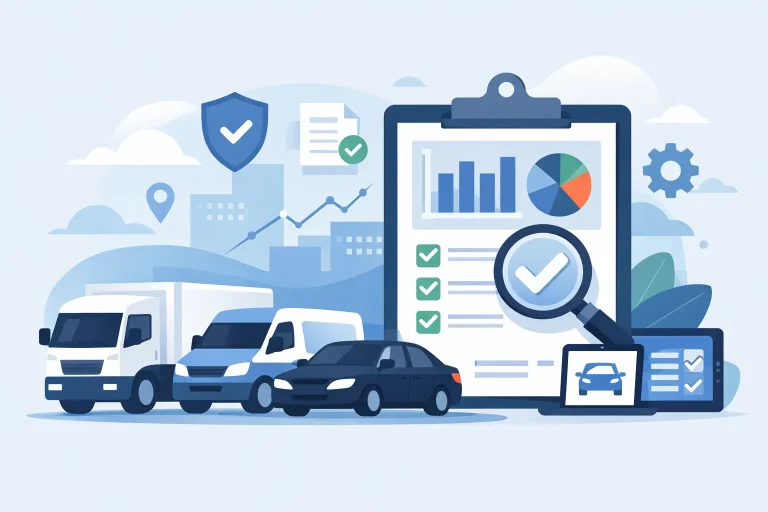
At its core, vehicle compliance reporting software brings compliance tasks, records and exceptions into one system. Instead of chasing paperwork across depots, vehicles and inboxes, your team can see inspection results, maintenance status, registration dates, driver activity and exception alerts in a single view.
That sounds simple, but the value is operational. A good platform helps you move from reactive administration to active management. You are not just storing records. You are identifying which vehicle is overdue for service, which driver has not completed a pre-start, which trailer has not been inspected, and which asset is likely to become a problem next week rather than next month.
The strongest systems also connect compliance reporting to live fleet activity. If a vehicle is being used heavily, compliance schedules should reflect that. If an asset is parked up, it may need a different maintenance cadence. Static spreadsheets struggle with that level of context. Connected software handles it far better.
Why manual compliance reporting breaks down
Most operators do not choose manual processes because they like them. They use them because that is how the business grew. One paper checklist became ten. One spreadsheet became five tabs and a colour code only one person understands. Over time, the process becomes fragile.
The first issue is inconsistency. Different drivers complete forms differently. Site supervisors record defects one way, workshop staff record them another. That makes reporting harder and trend analysis nearly impossible.
The second issue is delay. If defects are recorded at the end of the day, or handed in days later, there is a gap between the problem and the response. In transport, construction, community services and field operations, that gap can mean avoidable risk.
The third issue is visibility. Managers need more than a pile of completed forms. They need to know what is outstanding, what is recurring, and what needs attention now. That is where software changes the conversation. Instead of asking, “Has this been done?”, you can ask, “What is slipping, and why?”
The features that matter most
Not every platform will suit every fleet. A courier business with light vehicles has different needs from a civil contractor running utes, heavy vehicles, plant and non-powered assets. Still, there are a few essentials that separate useful systems from software that creates more work.
Digital inspections and defect reporting
Drivers and operators should be able to complete checks from a mobile device without a long learning curve. If the process is clunky, completion rates drop. The best systems make pre-starts, end-of-day checks and defect reporting quick enough to fit real workdays.
It also helps when defects can be escalated automatically. A minor note is one thing. A safety-critical fault should trigger immediate visibility for the right person.
Scheduled compliance reminders
Registration renewals, services, inspections, calibrations and licence checks all have dates attached. Good software tracks those dates and prompts action before they become overdue. Better still, it lets you manage by exception, so your team can focus on what needs attention rather than checking everything manually.
Reporting that is useful, not just available
Some systems generate plenty of reports but still leave managers doing manual interpretation. Useful reporting should make it clear where the compliance risks are, which assets are recurring offenders, and whether teams are actually completing required tasks on time.
For many businesses, the real benefit is not the report itself. It is the confidence that comes from having accurate records ready when a customer, regulator or insurer asks for them.
Integration with telematics and asset data
This is where many standalone compliance tools fall short. If your software does not connect with vehicle usage, odometer readings, engine hours or location data, scheduling can become blunt. You either over-service assets or miss the right trigger points.
A connected platform gives compliance reporting context. It can align maintenance schedules with real utilisation and show whether an asset that keeps missing inspections is also moving between sites without enough oversight.
What better compliance reporting changes day to day
The biggest gains are often less glamorous than people expect. Better vehicle compliance reporting software reduces admin friction. It shortens the time spent chasing forms, cross-checking dates and preparing for audits. It also gives operations staff clearer accountability.
For fleet managers, that means fewer surprises. For compliance managers, it means cleaner records and fewer gaps. For business owners, it means less exposure to avoidable risk and a better handle on costs tied to breakdowns, lost utilisation and poor documentation.
It also helps with customer confidence. In tender-heavy industries and contract environments, being able to demonstrate clean compliance processes can support credibility. You are not just saying the fleet is managed properly. You can show it.
There is also a safety benefit that matters beyond compliance. When inspections are easier to complete and defects are easier to escalate, issues get addressed earlier. That can reduce the chance of incidents and improve vehicle uptime at the same time.
Choosing vehicle compliance reporting software for a mixed fleet
This is where trade-offs matter. Some businesses need deep functionality for heavy vehicle compliance. Others need broader coverage across vehicles, trailers, plant, tools and field staff. The right choice depends on what you are trying to control.
If you run mixed assets, avoid systems designed only for standard vehicle tracking. You may end up with strong GPS data but weak compliance workflows for plant or non-powered equipment. Likewise, if your fleet includes staff who are not especially tech-confident, ease of use matters just as much as feature depth.
Support matters too. A platform may look capable in a demo, but if setup, training and ongoing changes are slow or generic, adoption suffers. That is especially true for businesses moving from paper to digital processes for the first time. The software has to fit operations, not the other way around.
In the Australian and New Zealand market, local support can make a genuine difference because compliance expectations, terminology and operating conditions are specific. You do not want to spend weeks explaining your workflows to a provider that does not understand how your fleet actually runs.
Common mistakes when buying compliance software
One common mistake is buying on reporting volume rather than reporting relevance. More dashboards do not automatically mean better oversight. If your managers still need to export data and rebuild it in spreadsheets, the software is not solving the core problem.
Another is treating compliance as separate from operations. In reality, maintenance, driver behaviour, utilisation, scheduling and safety all affect compliance outcomes. A disconnected tool may tick a box, but it will not help much when assets are moving constantly and teams are making decisions in real time.
The third mistake is underestimating rollout. Even straightforward software needs clear ownership, practical setup and sensible workflows. Start with the forms and alerts that matter most. Build from there. A staged approach usually lands better than trying to digitise every process at once.
What good looks like in practice
When vehicle compliance reporting software is set up properly, the work becomes quieter. Drivers know what checks are required. Admin staff are not buried in paper. Managers can spot overdue tasks quickly. Workshop teams get clearer defect information. Audit preparation stops being a scramble.
That is the real test. Good software should make compliance easier to manage in the middle of a busy week, not just easier to describe in a board report.
For businesses that want visibility across vehicles, trailers, plant and mobile teams, a connected fleet platform can go further by combining tracking, maintenance, compliance and reporting in one place. That is the kind of practical approach Eziway Tech is built around – reducing paperwork, improving accuracy and helping teams stay on top of daily operations without adding complexity.
The best compliance system is not the one with the longest feature list. It is the one your team will actually use, the one that surfaces risks early, and the one that helps keep vehicles moving for the right reasons.